 |
|
|
The Micro OTDR is the perfect tool
for the construction and maintenance of cable plants. It also measures
the attenuation in optical fibers and splices, as well as the length and
the distance to any event, such as a break in fiber link. This
affordable instrument is PC-based, that gives the user many advantages!
This high quality Micro OTDR is accurate enough for laboratory use but
portable and rugged enough for field applications. Read more about it in
this version of the AFS Newsletter! |
| |
Micro OTDR's |
| |
Multimode And Single mode |
|
|
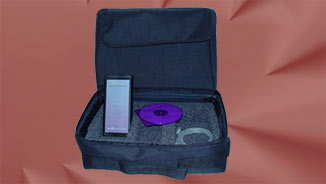
| AFS offers five models of Micro OTDR's, one multimode
and four single mode versions with different dynamic ranges. Take a look
at the advanced features of the uOR-100 series and uOR-200 series! |
 |
|
| These features applies
for all AFS Micro OTDR's: |
| - |
A distance range up to
240 kilometers. |
| - |
Refractive Index Range
Setting 1.0000 to 2.0000. |
| - |
Loss Resolution of 0.001
dB. |
| - |
Supply current from USB
port <200mA. |
| - |
Low distance accuracy. |
| - |
Event dead zone 3.5
meters. |
| - |
Handheld, lightweight and
easy to use. |
| - |
Optional there can be
ordered a short patch cord, it makes is possible to test
cables with different types of connectors. |
|
|
|
Click on picture for additional information
|
|
Profits Of PC-based |
| |
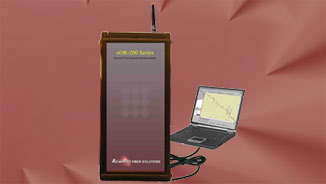
| All the AFS Micro OTDR's are PC-based OTDR's, that
gives the user many advantages. Read in the following part for what
reasons the OTDR's are used in conjunction with a PC or Laptop with a
USB interface: |
| - |
The unit is powered via the PC USB port
and requires no batteries or external power supply. |
| - |
The USB connection allows the instrument
to be controlled from a laptop or PC and runs off of
Windows 98 or more recent. |
| - |
The software allows the user to determine
all the necessary characteristics of the Optical Fiber
and is capable of displaying, storing, reading, printing
and analyzing several traces simultaneously. |
| - |
The OTDR has never a full
memory, because all data will be saved on the PC or
laptop. The memory- Trace storage is unlimited in
contrast to other manufacturers. |
|
|
 |
|
| |
| |
Technical Specifications In
Detail |
| |
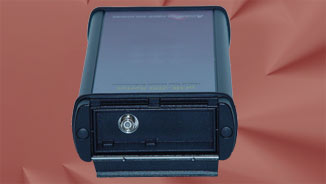
| As given above, there are five different versions of
the AFS PC-based Micro OTDR's. Naturally they all have various features.
That is the subject of the following part. The differences between the
models (types) are like explained in the tabular overview below. The
dynamic range is the feature which distinguish the SM OTDR'S of each
other. |
 |
|
|
Type |
Single-/
Multimode |
Wavelength |
Dynamic range |
|
uOR-101 |
MM |
850/1300 |
26/25 dB |
|
uOR-201 |
SM |
1310/1550 |
32/31 dB |
|
uOR-202 |
SM |
1310/1550 |
36/35 dB |
|
uOR-203 |
SM |
1310/1550 |
40/39 dB |
|
uOR-204 |
SM |
1310/1550 |
43/42 dB |
| |
|
| - |
The pulse width of the MM
goes from 10 to 1000 nS, at the SM from 10 to 20000. |
| - |
Attenuation Dead Zone of
the MM is 20m and SM 14m. |
|
|
| |
|
All in all, testing fiber optic cable plants are easy
if you have the right instruments and follow industry testing standards.
When diagnosing problems, you must be creative to develop techniques
that help reveal problems that show up on standard tests. It is most
important to know your tools operation and limitations, and how to work
around them. It is most helpful to have good cable plant documentation,
since knowing what you are looking at will make it much easier to find
problems. |
| |
AFS appreciate the
opinions of the distributors and the customers at
[email protected]. AFS
uses this information to improve its products and by the development of
new products.
AFS supports technical questions at
[email protected]. |
| |
| Email: |
[email protected] |
Hunnenweg 7 |
Terms of payment and |
Rabobank |
BTW/VAT-number |
| Tel: |
00-31-342-470734 |
3781 NM Voorthuizen |
delivery published
at Chamber |
36.63.12.553 |
NL001530485B96 |
| Fax: |
00-31-342-422616 |
Postbus 111 |
of Commerce
Harderwijk |
Postcheque BEF |
Internet |
| Video: |
00-31-342-477888 |
3780 BC Voorthuizen |
K.v.K. nr. 08077470 |
000-1692940-96 |
www.afs-europe.com |
|